Terrace House Agent in Singapore
Terrace houses get treated as one uniform category more often than they should be. In reality, an intermediate terrace and a corner terrace can offer meaningfully different ownership experiences, different light, different privacy, different resale value, even though both get listed under the same "terrace house" heading. A terrace house agent in Singapore should walk you through that distinction clearly, not just point at a listing and call it landed property. Colin Choo, PropNex Associate District Director with 14 years and close to 1,000 transactions across HDB, condo, landed, and commercial property, brings that same detail-first approach to terrace house transactions specifically. As a property consultant in Singapore, he helps buyers and sellers understand exactly what they're working with before any decision gets made.
What Actually Makes a Terrace House Different
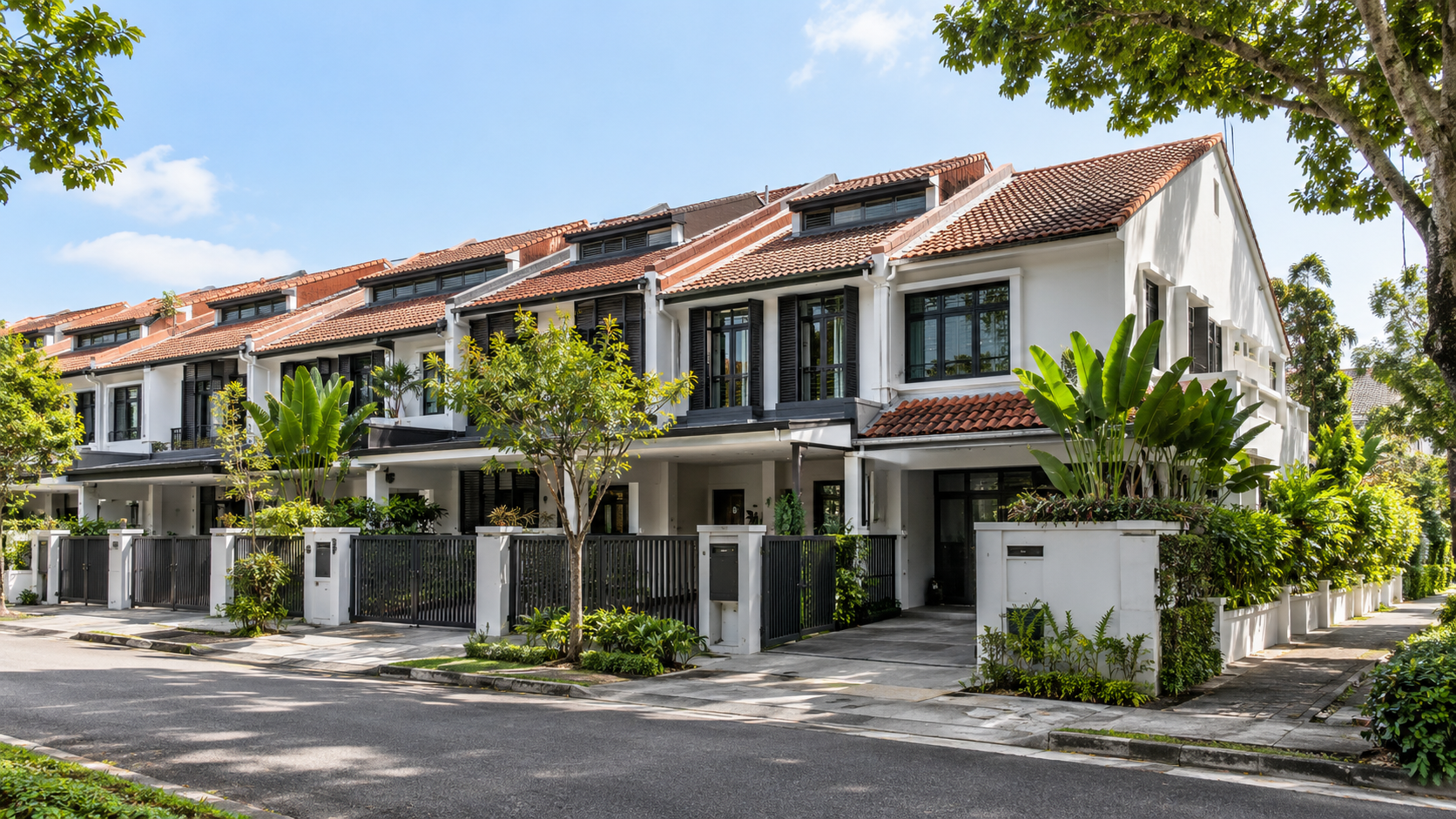
A terrace house is one of a row of at least three homes joined by shared walls, each with its own separate land title. That land ownership is what separates it from a condo or cluster house: you own the land beneath your unit outright, not a strata share of a wider development. This usually means your own garden or outdoor space and far more renovation freedom than a strata-titled property, with fewer strata-related considerations than a condo or cluster home, while still subject to planning and building requirements. It's generally the most accessible entry point into landed property in Singapore, real land ownership at a price point well below semi-detached or detached homes in the same area.
Intermediate vs Corner Terrace: Not the Same Purchase
Two buyers can both say they want a terrace house and end up with very different properties. An intermediate terrace sits in the middle of the row, sharing a wall on both sides, generally the most affordable way into landed ownership, with potentially less side exposure and more planning considerations for renovation work because of those shared walls. A corner terrace sits at the end of the row, sharing just one wall, with a larger plot, wider frontage, and the kind of side-facing light and privacy an intermediate unit simply can't offer.
That difference shows up in price. Corner units typically command a 10 to 20% premium over an equivalent intermediate terrace in the same estate, and URA's own planning rules treat them differently too: a Type 1 corner terrace needs a minimum land size of 200 square metres and an 8-metre frontage, a Type 2 corner needs at least 80 square metres with the same 8-metre frontage, while intermediate units typically work with a narrower 6-metre frontage. Knowing which type you're looking at changes both the price you should expect to pay and what you can realistically do with the property later.
Terrace vs Semi-Detached vs Detached
Some buyers start out looking at terrace houses and end up comparing them against a semi-detached house in Singapore once they see the price gap. Here's how the three actually stack up:
For buyers comparing landed options, understanding the difference between a terrace house and a semi-detached house in Singapore is an important step before deciding which property type fits their lifestyle. Factors such as shared walls, land size, privacy, and budget can significantly change the ownership experience.
| Features | Terrace | Semi-Detached | Detached |
|---|---|---|---|
| Shared walls | Both sides (intermediate) or one side (corner) | One side only | None |
| Land title | Own title | Own title | Own title |
| Typical entry price | Usually lowest of the three | 30–50% higher than an equivalent terrace | Highest of the three |
| Best for | First-time landed buyers, tighter budgets | More space without full detached pricing | Maximum privacy and land |
Price relationships are broad market patterns, not fixed rules, and vary by district, tenure, and land size.
What Do Terrace Houses Cost in Singapore?
Recent market observations place many intermediate terrace homes within a broad range of around S$1.6 million to S$3.2 million, while corner terraces often sit higher, roughly S$2.2 million to S$4.5 million, though both ranges shift significantly depending on location, freehold versus leasehold tenure, land size, condition, and redevelopment potential. A terrace house agent in Singapore should walk you through recent comparable transactions for your specific district rather than quoting a single number, since a District 11 freehold terrace and an outer-ring leasehold unit can sit worlds apart on price per square foot.
Renovating or Rebuilding a Terrace House
In plain terms: what you're allowed to do to a terrace house depends on how much of it you're changing. Minor works are usually straightforward. Anything more substantial gets classified by URA as Additions & Alterations, Reconstruction, or New Erection depending on scope, with A&A generally capped at 50% of approved GFA, external walls, and structural changes before a project gets reclassified as Reconstruction, a longer, more involved approval process.
Having two party walls, on an intermediate unit, means owners need to consider neighbouring structures, site conditions, and planning requirements more carefully during major renovations or reconstruction, requiring more coordination than a corner unit with just one shared wall, and considerably more than a fully detached home with none. Indicative market estimates for a full intermediate terrace reconstruction commonly run from roughly S$800,000 to S$1.2 million, with corner units typically higher given the larger plot, though these are contractor market estimates, not fixed benchmarks, and a proper quote against your specific plot is the only reliable number.
Who Can Buy a Terrace House in Singapore?
Terrace houses fall under the same restricted residential property rules as other landed housing. Singapore Citizens can generally purchase freely. Permanent Residents and foreigners typically need approval from SLA's Land Dealings Approval Unit before buying. Confirm your specific eligibility position before you start viewing properties.
Understanding these requirements early helps buyers plan their purchase with more clarity, especially when comparing landed property options and preparing for the next steps.
Is a Terrace House Right for You?
A terrace house tends to suit buyers who want genuine land ownership without the price tag of semi-detached or detached, and who are comfortable trading some privacy, more on an intermediate unit, less on a corner, for a meaningfully lower entry cost.
It's a harder fit if privacy and light are the top priority and budget allows for more; a corner terrace or a semi-detached house would likely serve that better than an intermediate unit. For the full picture across every landed housing type, Colin's landed property agent page is a good place to start.
Buy a Terrace House With Colin
- 01
Understand your goal.
Budget and whether an intermediate or corner terrace genuinely fits what you're after.
- 02
Confirm eligibility and financing.
Check properly before you view anything.
- 03
Shortlist properly.
Based on location, terrace type, frontage, and rebuild potential, not just the asking price.
- 04
Review the structure and walls.
Check condition, shared wall position, and any existing modifications on neighbouring units.
- 05
Negotiate and complete.
Handled properly from offer to keys.
Sell a Terrace House With Colin
- 01
Get an accurate valuation.
Based on recent comparable transactions for your specific terrace type and district.
- 02
Position the property properly.
Highlight what makes your unit stand out: corner frontage, rebuild potential, or renovation quality.
- 03
Filter serious enquiries.
Qualified buyers only, before viewings start.
- 04
Negotiate from real data.
- 05
Close with support through completion.
What Colin Checks Before You Commit to a Terrace House
- Land title, tenure, and terrace type (intermediate or corner)
- Frontage and plot size against URA's classification requirements
- Shared wall condition and any existing structural work on neighbouring units
- Rebuild and A&A potential under current URA envelope controls
- Recent comparable transactions for the specific terrace type and district
- Whether the unit's original approved housing form has changed
Explore Related Property Services
- Semi-Detached House Agent - For buyers weighing more space and one shared wall instead of two.
- Landed Property Agent - For the full picture across all landed housing types.
- Cluster House Agent - A strata-titled alternative with shared facilities.
- Residential Property Agent - Compare all residential categories in one place.
Ready to Buy or Sell a Terrace House?
Weighing an intermediate terrace against a corner unit, or terrace against semi-detached? Talk to Colin, a property agent in Singapore who explains the real trade-offs clearly, before you commit to a unit. He'll help you figure out which terrace type actually fits your budget and what you're trying to get out of the property.
Frequently Asked Questions
What's the real difference between an intermediate and corner terrace?+
An intermediate terrace shares walls on both sides and sits in the middle of the row. A corner terrace shares just one wall, sits at the end, and typically comes with a larger plot and 8-metre frontage under URA's classification, usually commanding a 10 to 20% premium over an equivalent intermediate unit.
How much does a terrace house cost in Singapore?+
Prices vary widely by district, tenure, land size, and condition. Current comparable transactions are the best guide for a specific property, a terrace house agent in Singapore can pull those for you rather than relying on a category-wide number.
Can foreigners buy a terrace house in Singapore?+
Generally, no, without approval. Terrace houses fall under the same restricted residential property rules as other landed housing, and foreigners typically need approval from SLA's Land Dealings Approval Unit before purchasing.
Is it harder to rebuild an intermediate terrace than a corner unit?+
Not harder exactly, but there's more to plan around. With walls shared on both sides, owners need to consider neighbouring structures and site conditions more carefully than a corner unit, which only has one shared wall to account for.
Is a terrace house a good first landed property?+
For many buyers, yes. It's typically the most accessible way into genuine land ownership, at a meaningfully lower price than semi-detached or detached, without giving up the core benefits of owning land outright.