Can You Buy an HDB Flat in Singapore? Eligibility Rules 2026
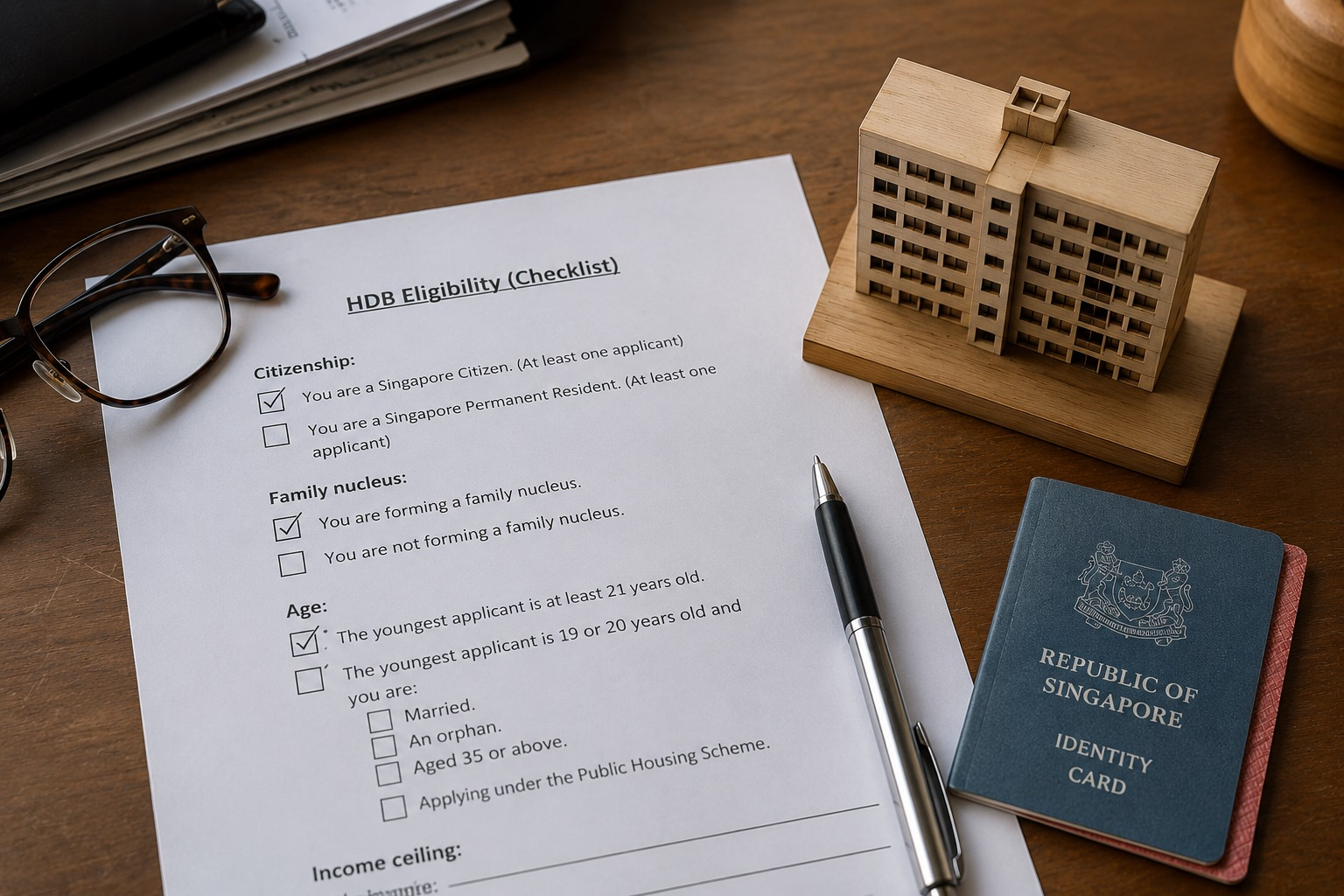
Yes, most people can buy an HDB flat in Singapore, but the exact rules depend on your citizenship, age, income, and whether you're going for a BTO or a resale unit. Get one of those factors wrong, and your application won't go through, no matter how much you love the flat.
This matters whether you're a first-time buyer, a PR figuring out your options, or someone helping a family member work through the process. So let's go through exactly who qualifies to buy an HDB flat in Singapore, and under which scheme.
Who Can Buy an HDB Flat?
To buy an HDB flat in Singapore, you generally need at least one Singapore Citizen in your application (or two Singapore Permanent Residents for resale flats), you must be at least 21 if buying with family or 35 if buying as a single, and you can't currently own another residential property.
Beyond that, the specifics shift depending on whether you're going for a new BTO flat or a resale unit, and that distinction trips up more buyers than almost anything else. One more thing worth flagging early: none of this eligibility discussion applies if you're trying to sell before the Minimum Occupation Period Singapore rules require, which is typically five years from key collection.
Citizenship and Family Structure Requirements
Every application needs the right mix of citizenship and family structure to qualify. At minimum, you need one Singapore Citizen listed, or two Singapore Permanent Residents for resale purchases specifically.
Age requirements differ based on how you're buying:
- 21 years or older, if buying within an approved family nucleus
- 35 years or older, if buying as a single under the relevant scheme
- 21 years or older, if widowed or orphaned and buying as a single
You'll also need to fit within the Ethnic Integration Policy and PR quota for the specific block or neighbourhood; more on that later, since it catches people off guard more than it should.
Getting familiar with the full HDB eligibility criteria Singapore sets out now saves a lot of wasted effort later, especially once you start shortlisting actual units.
BTO vs Resale: Different Flats, Different Rules
This is the split most guides gloss over, and it genuinely changes who's eligible.
| Factor | BTO Flat | Resale Flat |
|---|---|---|
| Citizenship | At least one applicant must be a Singapore Citizen | PRs can apply too; two SPRs are allowed |
| Income ceiling | $14,000 (couples), $21,000 (extended family), $7,000 (singles) | No income ceiling at all |
| Waiting time | 3 to 5 years, sometimes longer | Immediate, once the sale completes |
| Grants available | Enhanced CPF Housing Grant up to $80,000 | EHG plus Family Grant ($50,000) and Proximity Housing Grant ($30,000) |
If you're a PR without a Singapore Citizen co-applicant, BTO simply isn't an option; resale is your only path into an HDB flat. That single fact reroutes a lot of buyers before they even realize it.
Once you've confirmed you're eligible for resale, the next question is usually price. Our guide on HDB resale flat prices in Singapore breaks down what's actually driving values right now.
Income Ceilings: Why They Only Apply to Some Flats
Income ceilings exist to keep subsidised housing targeted at the people it's meant for. They apply to BTO and other subsidised flats, but not to resale purchases.
The logic here is simple: resale flats aren't subsidised by the government in the same way, so there's no income-based gatekeeping. This is exactly why higher-income households often end up buying resale even when they'd technically prefer a brand-new BTO unit.
The current HDB income ceiling 2026 figures, $14,000 for couples, $21,000 for extended families, $7,000 for singles, apply only at the point of application, so it's worth checking your household's gross monthly income against these thresholds before assuming BTO is off the table.
The 8 Eligibility Schemes Explained
Most guides mention these schemes in passing. Here's what each one actually means for you.
| Scheme | Who It's For |
|---|---|
| Public Scheme | Buying with family members, spouse, children, parents, or siblings |
| Fiancé/Fiancée Scheme | Buying with your fiancé or fiancée ahead of marriage |
| Single Singapore Citizen Scheme | Singaporean singles, 35+ (or 21+ if widowed/orphaned) |
| Joint Singles Scheme | Two Singaporean singles buying together, same age rules |
| Non-Citizen Spouse Scheme | Buying with a spouse on a Long Term Visit Pass or Work Pass |
| Non-Citizen Family Scheme | A single Singaporean buying with non-citizen family members |
| Orphans Scheme | Single orphaned siblings buying together |
| Conversion Scheme | Combining two adjoining 3-room-or-smaller flats into one unit |
Picking the wrong scheme, or not realizing which one actually applies to your household, is one of the more common reasons applications stall.
Matching the right scheme to your household is genuinely half the battle when you're trying to buy an HDB flat in Singapore; the other half is just paperwork.
Can Singapore PRs Buy an HDB Flat?
Yes, but with real limits. A Singapore Permanent Resident HDB purchase requires either a Singapore Citizen co-applicant, or two SPRs applying together for a resale flat; specifically, PRs cannot access BTO flats at all.
A single PR, on their own, cannot buy an HDB flat under any scheme. They'd need to apply jointly with family under the Public Scheme, or with a fiancé/fiancée under that scheme instead. Understanding this distinction early saves PR buyers real time before they try to buy an HDB flat in Singapore alone.
What Is the HFE Letter, and Do You Need One?
Yes, every buyer needs one. An HDB Flat Eligibility (HFE) Letter confirms your eligibility, loan eligibility, and CPF housing grant eligibility before you can apply for a flat or exercise a resale option.
Think of it as the gatekeeping step that happens before you even start viewing units seriously. Getting this sorted early avoids the frustrating scenario of falling in love with a flat, only to discover a scheme or eligibility issue weeks into the process.
If You Already Own Private Property
Rules differ sharply here depending on which type of HDB flat you're after. For subsidised flats, previous private property owners face a 30-month wait-out period before they can apply.
For non-subsidised resale flats, there's no wait-out period at all; you just need to dispose of your private property within 6 months of the resale flat's completion. If you're planning to downgrade or diversify from private property back into HDB, this distinction changes your entire timeline.
The Ethnic Integration Policy and PR Quota
Every block and neighbourhood has ethnic quotas and a separate PR quota, both updated on the first of each month. If a block has already hit its quota for your ethnic group or citizenship status, you simply can't buy there, regardless of how well you otherwise qualify.
This is worth checking before you fall for a specific unit, not after. Quotas can shift month to month, so a block that's open today might be closed by the time you're ready to submit an offer.
Quota checks rarely make anyone's shortlist of exciting steps, but skipping this is one of the fastest ways to waste weeks trying to buy an HDB flat in Singapore in the wrong block.
A Real Case: An Eligibility Mistake That Cost Time
One buyer came to us after three weeks of viewing units, only to discover the block she wanted had already hit its PR quota. She wasn't ineligible in general, just for that specific block, at that specific time.
We checked quota and scheme fit before she viewed a single other unit after that, and she found a comparable flat two streets over within days. A five-minute check upfront would have saved her three wasted weeks.
How Colin Choo Helps You Confirm Eligibility First
Most people start by browsing listings. That's backwards if you haven't confirmed your scheme, quota status, and HFE Letter yet.
At Colin Choo Property, Colin, Singapore's best property agent, walks buyers through eligibility before a single viewing gets booked, checking citizenship fit, income ceiling relevance, and quota status upfront. With 14 years handling HDB and condo transactions, he's seen most of the eligibility pitfalls firsthand, which means fewer surprises once you're actually ready to buy an HDB flat in Singapore.
Final Thoughts
Working out whether you can buy an HDB flat in Singapore comes down to five checks: citizenship, age, income ceiling, scheme fit, and quota status. Confirm all five before you start viewing units, and the rest of the process gets a lot smoother.
Ready to check your eligibility before you start house-hunting? WhatsApp Colin Choo at Colin Choo Property for a free, no-pressure conversation.
Free, No-Pressure Consultation
Check your HDB eligibility with Colin
No obligation. No pitch. Just a clear read on your scheme, income ceiling, and quota status before you start viewing flats.
WhatsApp Colin ChooFAQs
1. Can a single person buy an HDB flat in Singapore?+
Yes, if they're a Singapore Citizen aged 35 or older (or 21 if widowed or orphaned), under the Single Singapore Citizen Scheme. Single PRs cannot buy alone.
2. Do PRs need a Singapore Citizen to buy an HDB flat?+
Not always. Two Singapore Permanent Residents can jointly buy a resale flat together, without needing a Citizen co-applicant.
3. Is there an income ceiling for resale HDB flats?+
No. Income ceilings only apply to BTO and other subsidised flat types; resale purchases have no income cap at all.
4. What happens if I already own a private property?+
You'll face a 30-month wait-out period for subsidised flats, but no wait-out for resale flats, just a requirement to sell your private property within 6 months of the resale completion.
5. Do I need an HFE Letter before viewing flats?+
You'll need one before applying or exercising an option, so getting it early avoids wasted time on units you may not actually be eligible for.