HDB Resale Flat Prices in Singapore: What Drives Value?
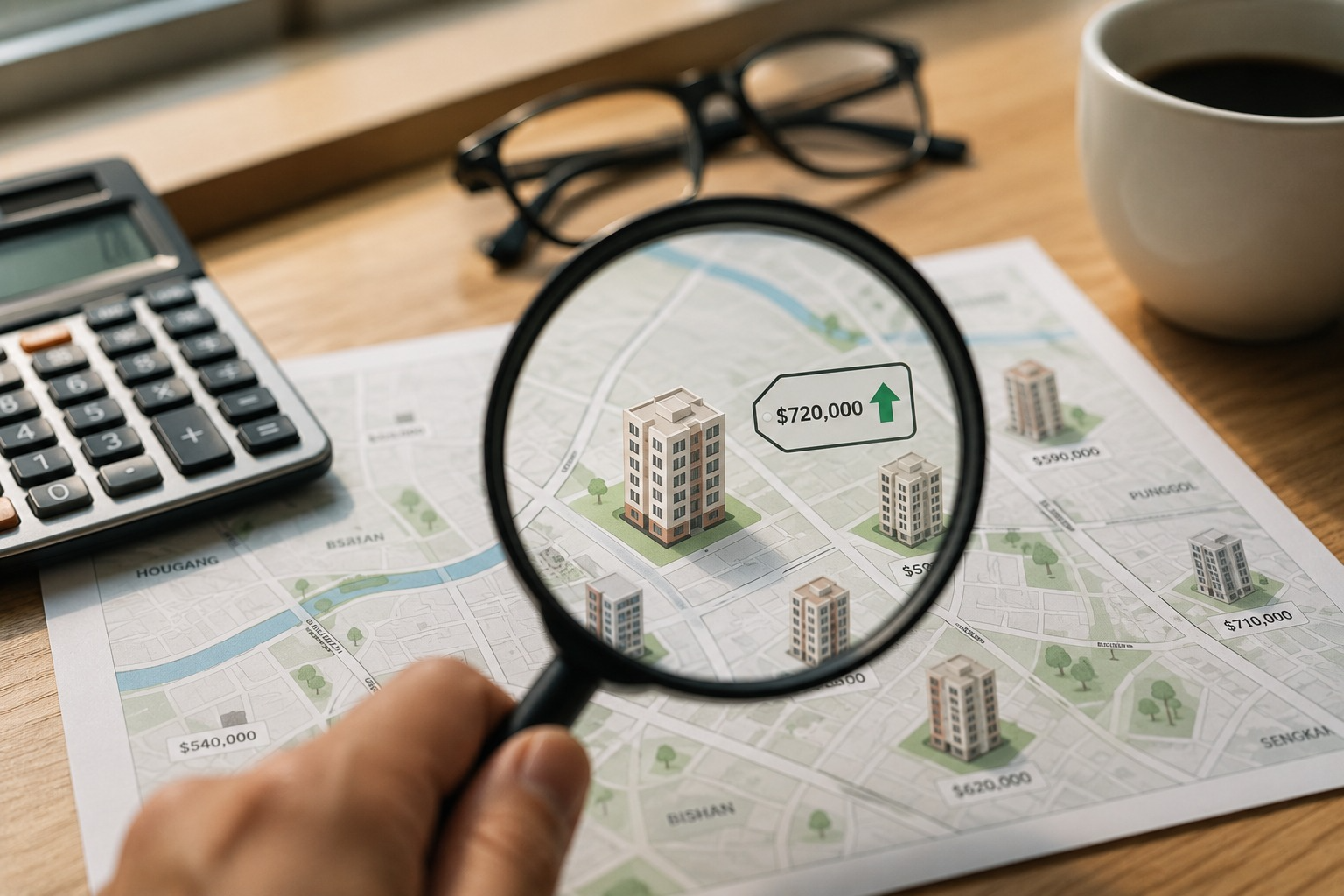
If you're trying to make sense of HDB resale flat prices in Singapore right now, here's the honest picture: after years of steady climbing, the market has just posted its first back-to-back quarterly decline since 2019. That doesn't mean prices are crashing. It means the story is more nuanced than the headlines from a year ago.
Whether you're buying, selling, or just trying to understand what your own flat might be worth, the numbers only make sense once you understand what actually drives HDB resale flat prices in Singapore. So let's walk through it properly, using the most current data available.
Where HDB Resale Prices Stand Right Now
The HDB Resale Price Index climbed from 131.5 in early 2020 to a record 203.7 in 2025. Annual growth eased from 9.7% in 2024 to 2.9% in 2025, still growth, just slower. This is exactly what the HDB Resale Price Index Singapore relies on to track the public housing market quarter to quarter.
Then came a real shift. The index slipped 0.3% in the second quarter of 2026, landing at 202.7, after already dipping 0.1% in the first quarter. That's two straight quarterly declines, the first time that's happened since 2019.
Transaction volume tells a similar story. Roughly 6,268 flats changed hands in Q2 2026, down 10.2% from the same period last year. Fewer buyers competing for flats, combined with softening prices, points to a market that's cooling rather than correcting sharply.
Understanding HDB resale flat prices in Singapore right now means holding two facts at once: prices remain historically high, but the growth engine that powered the last few years has clearly slowed down.
The Million-Dollar Flat Trend
Even with the recent slowdown, million-dollar HDB transactions became a defining story of the past two years. A record 1,035 flats resold for at least $1 million in 2024, more than doubling the 470 recorded in 2023. That momentum carried into 2025, with 348 million-dollar flats sold in the first quarter alone.
This trend is concentrated, not broad-based. It's mostly newer four-room flats in mature, well-located estates like Toa Payoh, Bukit Merah, and Queenstown. If your flat isn't in one of those categories, this headline number doesn't reflect what's actually happening to your own asset.
It's a good reminder that headline coverage of HDB resale flat prices in Singapore rarely tells the whole story for any single flat.
Location: Still the Biggest Price Driver
Nothing moves HDB resale flat prices in Singapore more consistently than location. Proximity to MRT stations, schools, and shopping malls, particularly within mature estates, drives buyer interest and price premiums.
Here's how that plays out across recent town-level data:
| Town | Flat Type | Approx. Median Price | Why |
|---|---|---|---|
| Bukit Timah | 4-room | $810,000 | Central location, top primary schools |
| Queenstown | 4-room | $720,000 | Established amenities, strong connectivity |
| Bishan | 4-room | $660,000 | Central location, school proximity |
| Sengkang | 4-room | $495,000 | Good MRT coverage, non-mature pricing |
| Hougang | 4-room | $510,000 | Affordable mature-adjacent estate |
The same flat type can sell for more than double depending purely on which town it sits in. A smaller flat in a premium location will often outprice a larger flat somewhere less central.
Supply and Demand: Why BTO Timing Matters
Resale prices respond directly to how many new flats are entering the market. When BTO supply is tight or waiting times stretch out, more buyers turn to resale flats, pushing demand and prices upward. There's a demand-side factor people overlook too: population growth increases the pool of renters, which means landlords need a stronger resale price to be persuaded to sell rather than continue renting out their unit.
Looking ahead, an October 2026 BTO exercise covering roughly 8,000 flats across 7 projects, alongside a growing pipeline of private housing, is expected to keep moderating resale demand through the rest of the year. That's a real signal for anyone timing a purchase or sale in the coming months. Supply timing like this is one of the clearest levers behind where HDB resale flat prices in Singapore head next, and it's worth watching closely if you're planning a move in the next six to twelve months.
If you're planning to sell your HDB as part of a move to private property, timing this correctly matters even more. Our guide on upgrading from HDB to condo walks through the full sequencing, from MOP eligibility to ABSD timing.
Remaining Lease and Why It Matters More Than People Think
Lease length isn't just a technicality; it directly affects loan eligibility, CPF usage limits, and how confident a buyer feels about long-term value.
Flats with longer remaining leases tend to appeal more to younger buyers planning to hold the property for decades. As a lease shortens, financing options narrow, and that naturally puts downward pressure on price, even before lease decay becomes an urgent concern.
That's the remaining lease HDB value calculation in a nutshell: shorter leases mean narrower financing and softer long-term price support, regardless of how good the location is.
Flat Type and Size
Different flat types serve different buyers, and that shapes pricing in ways headline numbers don't always capture. Smaller flats attract budget-conscious buyers and tend to price lower overall. Larger flats, five-room, executive, and maisonette units, can command unusually strong prices when supply of that specific type is limited in a given area.
This is why comparing a town's "average" price across all flat types can be misleading. Two towns might look similar on paper while having completely different pricing patterns once you break it down by flat type.
Flat type and size are just two of many factors affecting HDB resale price, but they're often the most visible ones once you start comparing listings side by side. Anyone trying to understand HDB resale flat prices in Singapore properly needs to look past the headline number and check flat type first.
How HDB Valuation Actually Works
HDB valuation Singapore rules are based mainly on comparable transactions, recent sales within the past 12 months for similar flat type, size, location, and floor range. Adjustments are made for factors like lease decay or new developments nearby that might affect desirability.
Importantly, this valuation isn't set by the buyer, seller, or property agent. It's an independent figure used to determine how much CPF and loan financing a buyer can access, separate from what a buyer might actually agree to pay.
Cash Over Valuation (COV)
Cash Over Valuation, or COV, is the gap between what a buyer actually pays and HDB's assessed valuation. It must be paid entirely in cash, not CPF, not through the bank loan.
In a market like the one we're in now, with prices softening for two consecutive quarters, COV amounts tend to shrink or disappear in some transactions, since buyers have more room to negotiate. Sellers who priced their expectations around 2024's growth may need to recalibrate, especially if their flat isn't in a high-demand town.
Cash Over Valuation (COV) Singapore buyers and sellers deal with today looks very different from what it looked like during the boom years, and that gap is worth understanding before you set your price expectations.
A Full Worked Example
Let's put real numbers behind this. Take a 5-room flat with an HDB valuation of $618,000.
- CPF downpayment (20%)
- $123,600, covered by $120,000 in CPF Ordinary Account savings plus a $3,600 cash top-up
- Cash required at exercise
- COV of $22,000, Buyer's Stamp Duty of $12,950, legal fees of $2,800, HDB admin fee of $80, and the $3,600 CPF shortfall, totaling $41,430
- CPF Housing Grants applied
- Enhanced Housing Grant of $50,000 plus Family Grant of $50,000, for $100,000 total
- Net effective price after grants
- $540,000
- Monthly installment
- roughly $2,240
With $60,000 in savings and a $41,430 cash outlay, this buyer retains about $18,570 in liquid cash after the purchase, comfortable, but worth planning for precisely rather than guessing.
How Colin Choo Helps You Price or Bid Accurately
Numbers like these shift constantly, and pricing a flat correctly right now, in a market that just turned from growth to decline, takes more than plugging figures into a calculator.
At Colin Choo Property, the best property agent in Singapore, pricing conversations start with actual recent transactions in your specific block and estate, not town-wide averages that can be misleading. Colin has spent 14 years tracking HDB resale flat prices in Singapore across both HDB and condo transactions, which means sellers get a realistic listing price and buyers get a clear read on whether an asking price actually reflects current market conditions.
That local, block-level accuracy matters more now than it did during the growth years, when almost any reasonable price tended to sell quickly.
Final Thoughts
HDB resale flat prices in Singapore right now sit at an interesting turning point: historically high, but no longer climbing the way they were a year or two ago. Location, lease, flat type, and timing all still matter, just with less margin for error than during the boom years.
Want a realistic read on what your flat is actually worth today? WhatsApp Colin Choo at Colin Choo Property for a free, no-pressure conversation.
Free, No-Pressure Consultation
Talk to Colin Choo directly
No obligation. No pitch. Just a straightforward conversation about your flat's value in today's market.
WhatsApp Colin ChooFAQs
1. Why did HDB resale prices fall in 2026?+
The Resale Price Index dropped 0.3% in Q2 2026, following a 0.1% dip in Q1, marking the first back-to-back quarterly decline since 2019. Slower transaction volume and a growing supply pipeline are the main contributors.
2. What determines HDB valuation?+
Valuation is based mainly on comparable recent transactions, similar flat type, size, location, and floor range, with adjustments for lease decay or nearby developments.
3. What is Cash Over Valuation (COV)?+
COV is the amount a buyer pays above HDB's assessed valuation, paid entirely in cash. It tends to shrink when the market softens, as we're seeing now.
4. Do million-dollar HDB sales reflect the whole market?+
No. They're concentrated in specific towns, newer four-room flats, and mature estates. Most transactions across Singapore fall well below that threshold.
5. How much does remaining lease affect resale value?+
Significantly. Shorter leases reduce loan eligibility and CPF usage limits, which narrows the buyer pool and puts downward pressure on price over time.