HDB vs Condo Singapore: Upgrade Guide for Buyers in 2026
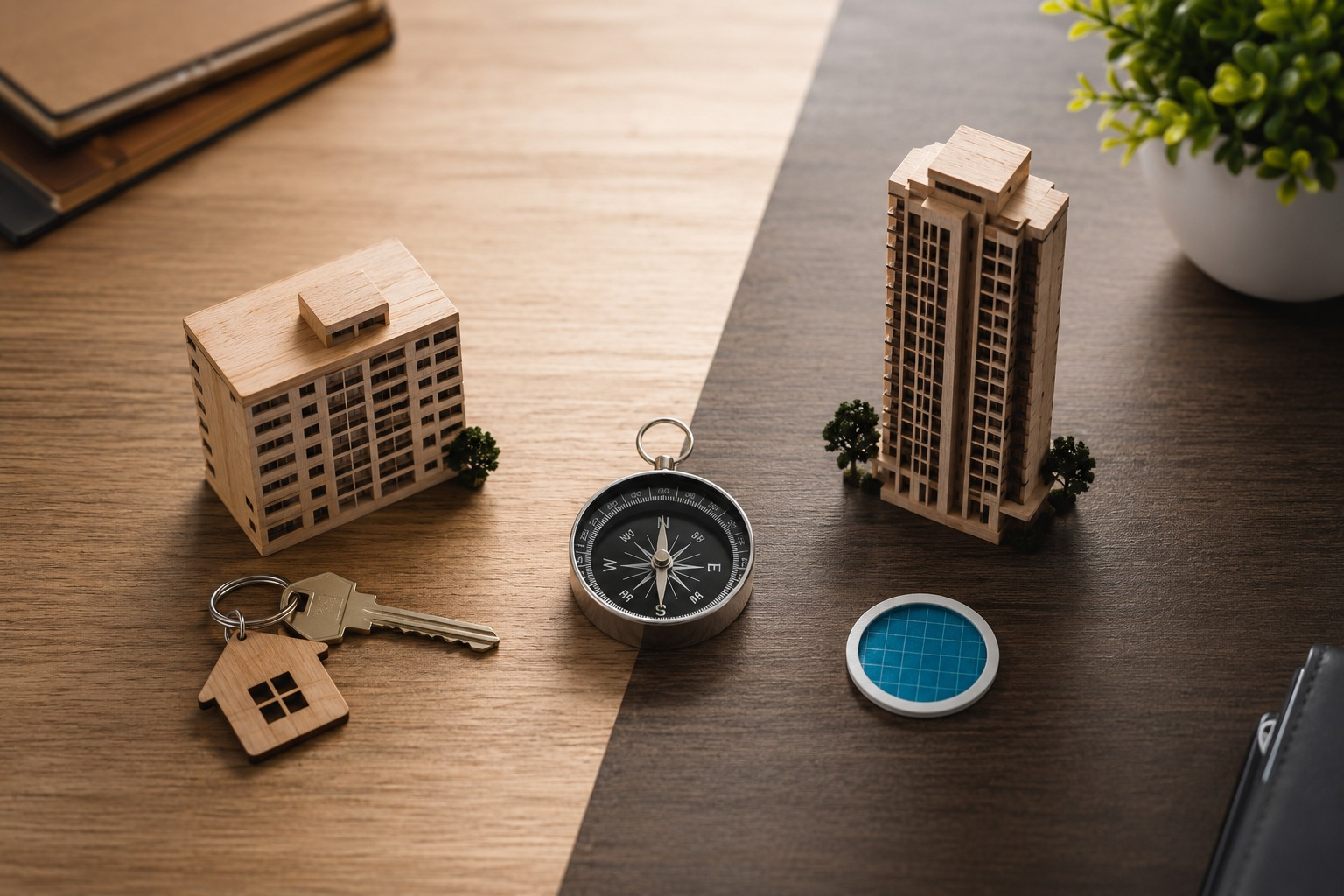
If you're weighing HDB vs Condo in Singapore for your next upgrade, the honest answer is that "better" depends less on the property and more on whether your finances are actually ready. Both paths build wealth. The question is which one fits your situation right now.
This matters most for families who've already cleared their HDB's MOP and are sitting on real equity for the first time. Get the sequencing wrong, and you could pay $300,000 more than you needed to. So let's work through this properly.
The Real Question Isn't "Which Is Better"
Most comparisons frame this as a straight fight, HDB versus condo, pick a winner. That framing misses the point entirely.
The real question behind HDB vs Condo in Singapore isn't about which asset class is objectively superior. It's about whether upgrading right now improves your specific financial position, or whether you're better off staying put for another year or two.
Are your finances actually ready? Will upgrading genuinely improve your long-term position, or are you chasing a lifestyle upgrade you can't yet afford? Those are the questions worth answering before you look at a single showflat.
Anyone serious about an HDB to condo upgrade needs to answer those questions with numbers, not gut feeling.
Price Reality Check
Numbers first, feelings second. Here's what you're actually comparing.
| Property Type | Typical Price Range | Recurring Costs |
|---|---|---|
| HDB resale (mature estate, 4-5 room) | $500,000 to $800,000+ | Conservancy fees, low |
| Condo (OCR) | $900,000 to $1,500,000 | Maintenance fees $300 to $600+/month |
| Condo (RCR/CCR) | $1,500,000 and up | Maintenance fees often $500 to $800+/month |
That maintenance fee line matters more than people expect. Unlike HDB conservancy charges, condo MCST fees run every single month for as long as you own the unit, funding security, pool upkeep, and common area maintenance. Over a 20-year hold, that's easily $100,000 or more in cumulative cost that a straight purchase-price comparison completely misses.
Space and Layout: Where HDB Actually Wins
Here's something most comparison articles gloss over: HDB often wins on pure space per dollar. A 4-room HDB flat at 90 or more square metres frequently offers more living space than many 2-bedroom condos costing three times as much.
For families who prioritize room to actually live in, space for kids, storage, and extended family visits, this is a real trade-off, not a footnote. Condo living compresses square footage in exchange for facilities and finishes.
Space is one of the most underrated factors in the HDB vs Condo in Singapore decision; it rarely makes the highlight reel, but it affects daily life more than almost anything else on this list.
Lifestyle and Privacy: Where Condo Actually Wins
Condos earn their premium through what HDB estates structurally can't offer. Reinforced concrete construction and controlled access mean stronger acoustic privacy and less foot traffic from non-residents, compared to HDB's public corridors and shared lift lobbies.
Then there's the facilities package: pools, gyms, function rooms, security, built into nearly every condo development today. Whether that's worth the premium depends entirely on how much you'll actually use it, not just whether it sounds appealing on paper.
This lifestyle trade-off is exactly the kind of factor that makes the HDB vs Condo in Singapore decision such a personal one, rather than a purely financial one.
The Financial Mechanics: Your Real Net Proceeds
This is where most upgraders get their numbers wrong. Your actual cash available for the condo purchase isn't your HDB's sale price; it's what's left after several deductions.
The formula looks like this:
HDB Sale Price − Outstanding HDB Loan − CPF Principal Used − Accrued CPF Interest = Net Cash Proceeds
The CPF accrued interest line catches people off guard constantly. Every dollar of CPF used toward your HDB accumulates interest at 2.5% per annum, and the full amount, principal plus interest, must be returned to your CPF Ordinary Account upon sale. Depending on how long you've owned the flat, this can run into tens of thousands of dollars you weren't expecting to lose from your proceeds.
From what's left, you'll need to cover the condo's 25% down payment, Buyer's Stamp Duty, legal fees, and any renovation, before you even get to ABSD, which we'll cover next.
Sell First or Buy First: The ABSD Decision
This single decision changes your total cost by hundreds of thousands of dollars, and it's the sharpest fork in the entire upgrade process.
Buy before selling, and you're purchasing as a second-property owner. Singapore Citizens pay 20% ABSD on that purchase; on a $1.5 million condo, that's $300,000, due upfront.
Sell first, and you enter the condo purchase as a first-time private property owner instead, paying 0% ABSD as a Singapore Citizen. The tradeoff is temporary displacement; many upgraders rent for 6 to 12 months between transactions while the two deals get sequenced.
There's no universally right answer here. It depends on how much ABSD savings matter to you versus how much disruption a temporary move causes your family.
Understanding ABSD Singapore rules properly, before you commit to a sequence, is what separates a $300,000 mistake from a well-planned upgrade.
Buy First vs Sell First: The Trade-Off at a Glance
| Factor | Buy First | Sell First |
|---|---|---|
| ABSD (Singapore Citizen, 2nd property) | 20%, e.g. $300,000 on a $1.5M condo | 0%, treated as first property |
| Cash needed upfront | Higher, ABSD due immediately | Lower, no ABSD to fund |
| Housing continuity | No gap, move directly | Temporary housing needed, typically 6 to 12 months |
| Timing pressure | Lower, no rush to sell | Higher, HDB sale must complete before condo purchase |
| Best suited for | Buyers with strong cash reserves who want zero disruption | Buyers prioritizing cost savings over convenience |
Is an Executive Condo the Middle Path?
ECs sit between HDB and private condo, and for some upgraders, that middle ground is exactly right. ECs offer condo facilities at prices roughly 25 to 35% below comparable private condos, while remaining under HDB regulations for the first ten years.
Eligibility requires gross monthly household income under $16,000, with at least one applicant a Singapore Citizen. During the HDB-regulated period, you can't sell or rent freely, but after privatization at year ten, the unit unlocks full private property status and valuation.
If ABSD-free upgrading matters more to you than immediate liquidity, this pathway is worth serious consideration before committing to a straight private condo purchase.
Investment and Rental Angle
If part of your upgrade decision is investment-driven, the numbers split differently than owner-occupied comparisons suggest. HDB flats can post stronger percentage rental yields, but condos generate materially higher absolute rental income due to higher rents in dollar terms and a broader pool of eligible tenants, including foreigners.
Condos also carry no Minimum Occupation Period restriction once purchased, meaning immediate rental flexibility that HDB flats simply don't offer during MOP. For pure investment purposes, that flexibility often outweighs the yield percentage on paper.
If your version of the HDB vs Condo in Singapore decision is really an investment question rather than a lifestyle one, this section matters more than any of the others.
Signs You're Actually Ready to Upgrade
Before you start viewing condos, check whether these are actually true for you:
- •Your HDB has cleared its 5-year MOP
- •You've calculated your real net proceeds, not just your HDB's sale price
- •You have an In-Principle Approval confirming your loan ceiling
- •You've decided on sell-first or buy-first, and budgeted for either ABSD or temporary rental
- •Your monthly repayment fits comfortably within your income, factoring in monthly maintenance costs
If any of these are still unclear, that's the actual signal, not the market, not the calendar. For the full walkthrough of what comes next, see our guide on how to upgrade from HDB to condo in Singapore.
Answering the HDB vs Condo question honestly starts with this checklist, not with browsing listings.
A Real Case: Two Families, Two Different Right Answers
One family we worked with had strong CPF balances and a flat in a prime, appreciating estate. Selling first made sense; a short rental period was a small price for avoiding $280,000 in ABSD.
Another family had young kids in a nearby primary school and couldn't tolerate the disruption of a temporary move. They bought first, accepted the ABSD, and planned around it as a fixed cost rather than something to avoid at all costs.
Both were the right decision for that specific family. Neither would have worked well for the other.
That's the clearest proof that HDB and condos in Singapore were never going to have a single universal answer.
How Colin Choo Helps You Decide, Not Just Execute
Most agents jump straight to showing condos. That's backwards for anyone still deciding whether the HDB vs Condo in Singapore question even applies to their situation yet.
At Colin Choo Property, Colin, Singapore HDB & Condo Advisor, starts with your net proceeds calculation and your sell-first-versus-buy-first decision before any shortlist gets built. With 14 years across HDB and condo transactions, he's run this exact sequencing conversation with hundreds of upgrading families, which means the affordability math happens before the emotional attachment to a specific unit does.
Final Thoughts
HDB vs Condo in Singapore doesn't have one universal answer. It comes down to your net proceeds, your ABSD strategy, and how much disruption your family can absorb during the transition.
Ready to run your actual numbers instead of guessing? WhatsApp Colin Choo at Colin Choo Property for a free, no-pressure conversation.
Free, No-Pressure Consultation
Talk to Colin Choo directly
No obligation. No pitch. Just a straightforward conversation about your net proceeds and the right upgrade sequence.
WhatsApp Colin ChooFAQs
1. Should I sell my HDB before buying a condo?+
It depends on your priorities. Selling first avoids ABSD entirely but requires temporary housing. Buying first avoids disruption but costs 20% ABSD as a Singapore Citizen on a second property.
2. How much does accrued CPF interest reduce my HDB sale proceeds?+
It varies by how long you've held the flat and how much CPF you used, but it can run into tens of thousands of dollars, all of it returned to your CPF Ordinary Account, not available as cash.
3. Are condo maintenance fees really that significant?+
Over a long hold, yes. At $300 to $800+ per month, maintenance fees can add up to $100,000 or more across 15 to 20 years, a cost HDB living simply doesn't carry.
4. Is an EC a good alternative to a private condo?+
For upgraders wanting condo facilities without the full ABSD exposure of a second property, yes. The tradeoff is HDB-style restrictions for the first ten years before privatization.
5. What's the biggest mistake upgraders make?+
Calculating their budget off the HDB's sale price instead of actual net proceeds after the outstanding loan and accrued CPF interest are deducted.